Gábor Kitzinger (HU), András László Nagy (HU), Rozi Mákó (HU) → X Kinetic Techno Sculpture

19:00-24:00
  • 11 City center
  • Interactive object installation

About project

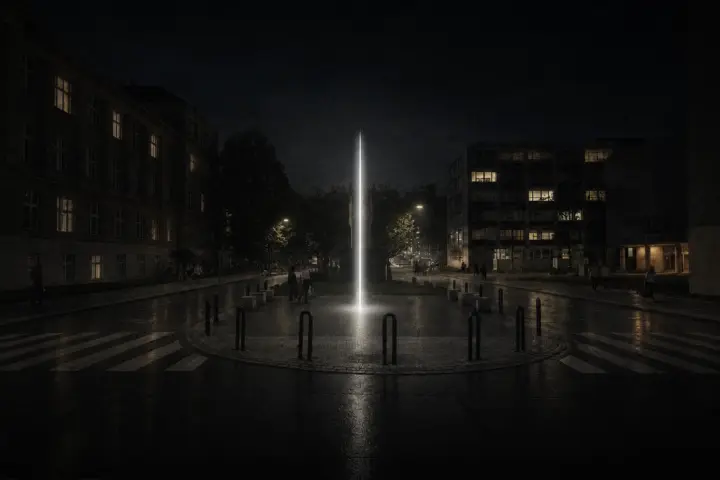
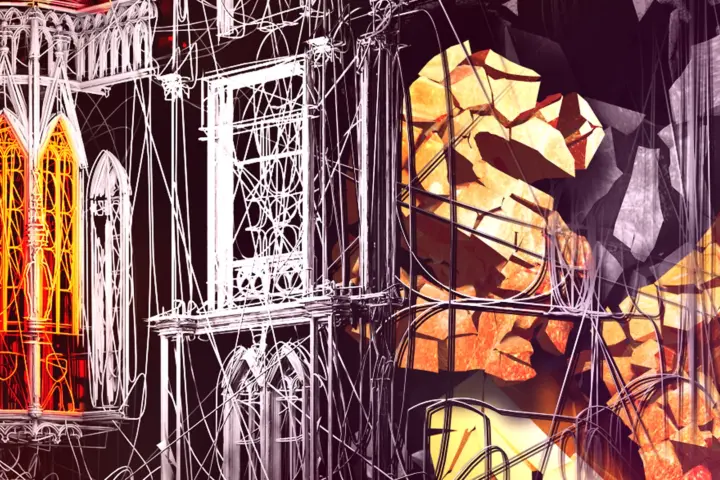
X Kinetic Techno Sculpture invites visitors into a space where the boundaries between the body, technology and consciousness dissolve. A mirrored surface, robotic lights and spatial sound respond to the human body’s internal rhythms. Each breath and heartbeat of the visitor is translated in real time into a composition of light, sound and movement, existing only for that particular moment.

The installation draws on Roger Penrose and Stuart Hameroff’s theory of ‘Orchestrated Objective Reduction’, which proposes that consciousness may arise from quantum processes that extend beyond our conventional understanding of the brain. The work uses this hypothesis as a starting point for reflecting on what shapes our experience, perception and consciousness itself.

In keeping with this year’s theme, Dream On! Dreams and Visions, X Kinetic Techno Sculpture explores a space where the measurable intersects with the intangible. Is consciousness merely a set of measurable processes, or does it also contain the source of our dreams and visions?

The Artwork is presented with the support of 0XColletion – a leading international initiative dedicated to the collection, display, and advancement of digital and experiential art.


Artist

Gábor Kitzinger is a Hungarian video artist and multimedia artist. His work with 3D animation and video mapping began in the early 2000s with VJing at underground techno events. In 2006, he joined the Glowing Bulbs collective, with whom he designed several large-scale video mappings and presented A/V shows around the world. In his more recent sculptural work, he creates structures from interactive pseudo-holographic constructions.

András László Nagy is a Hungarian artist whose practice is shaped by the intersection of visual art and classical music. His work explores light in all its forms — from interactive installations and light projections to kinetic sculptures — while seeking a new visual language at the intersection of generative and interactive media. His distinctive style is characterised by abstract and minimalist elements. At the 2023 edition of Signal Festival, he presented Luminary Glyphs, a projection on the Municipal Library building that connected the history of writing with contemporary technologies, including artificial intelligence.

Rozi Mákó is a composer and performer based in Budapest. She studied classical and jazz piano and sonology at the Royal Conservatoire in The Hague. She co-composed the music for the short film 27, which won the Palme d’Or at Cannes. At festivals, she presents her audiovisual performance NEST and works on a range of other projects — from the audiovisual dance performance URFORM and analogue industrial techno (Committee, Tsering) to music for contemporary theatre. Her work combines structured improvisation with experimental music and an emphasis on the uniqueness of the moment.

Location

The Mirror Chapel is part of the National Library complex within the Klementinum, the second-largest Baroque complex in Prague. It was built in the first third of the 18th century and is attributed to the architects Kilián Ignác Dientzenhofer and František Maxmilián Kaňka. The chapel’s interior is dominated by a five-part ceiling fresco by Jan Hiebl, complemented by a series of mirrored wall ornaments and a pair of facing Baroque organs, both originating from master workshops of the 18th century. Thanks to its extraordinary interior, for which the builders chose a striking combination of marble, mirrors, gilded stucco decoration, frescoes and paintings, the Mirror Chapel is one of the Klementinum’s greatest treasures.

  • Patron of the installation

    0x.collection

  • Location partner

    National library of the Czech Republic